Engineering
The tree is alive. We build like it.
A treehouse is a structure whose foundation sways, grows an inch of girth a year, and heals around what you bolt to it. Getting that right is most of our job.
One big bolt beats twenty small ones
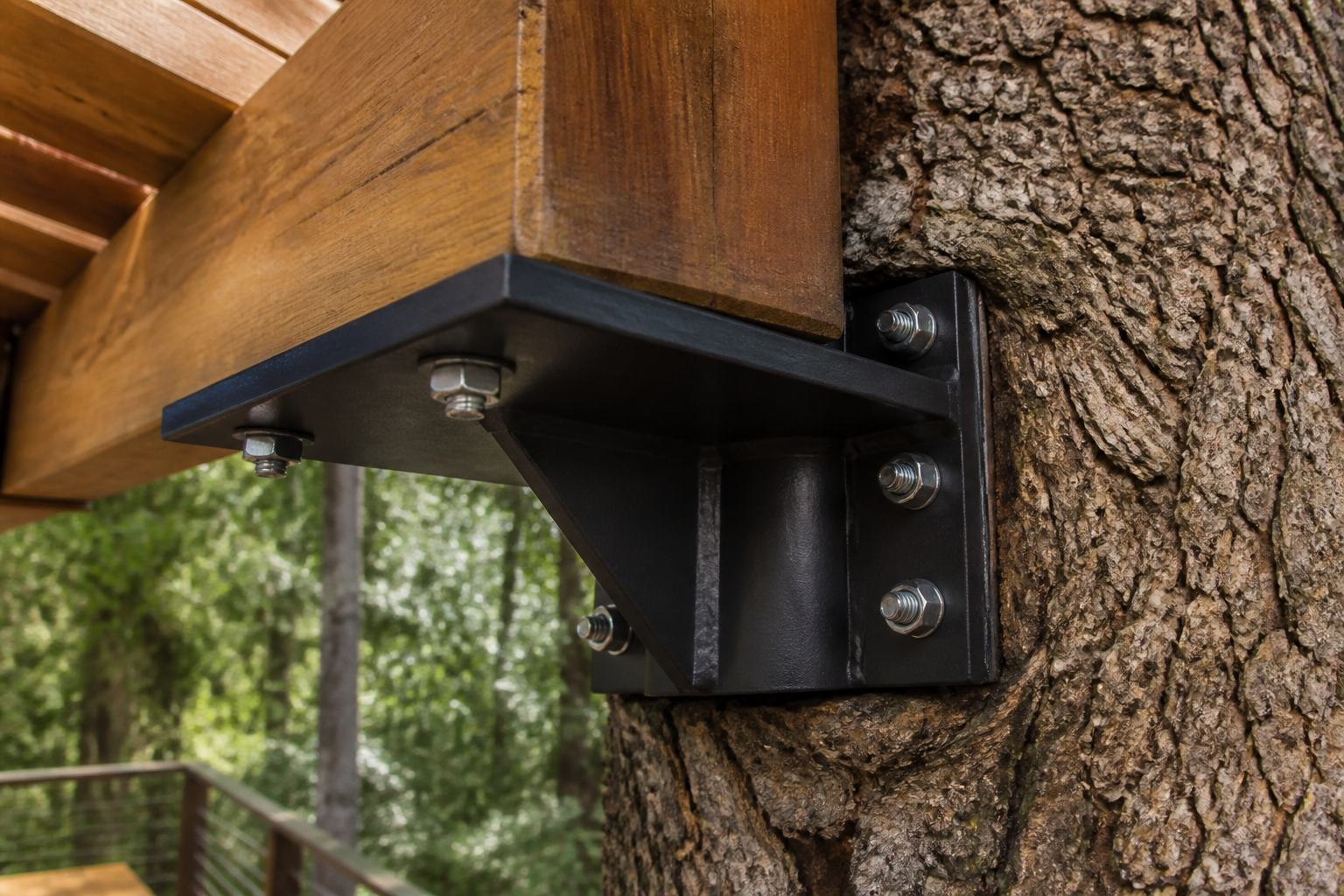
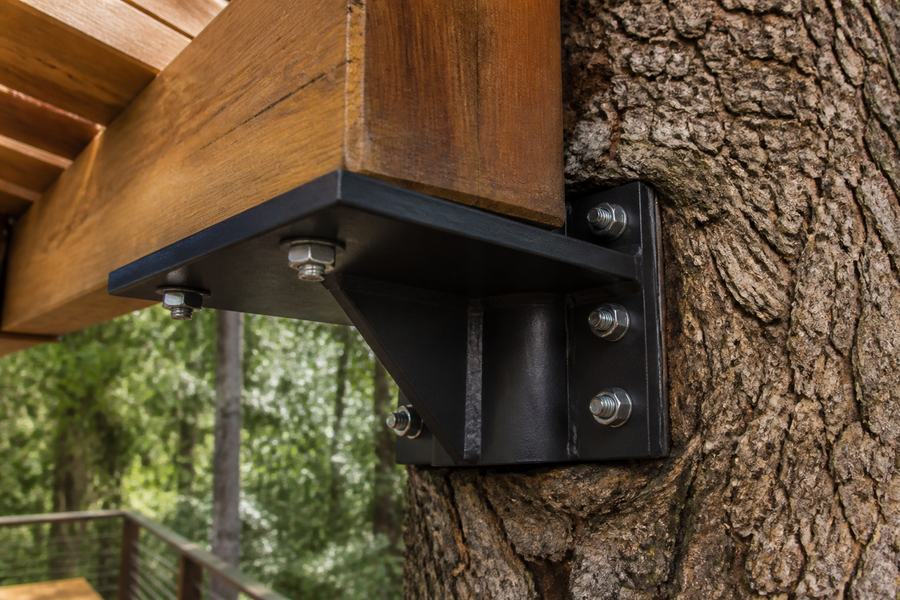
Everything we hang on a tree hangs on a treehouse attachment bolt — a machined steel stem, about three inches through at the collar, seated in a single bored hole in the trunk's structural wood. The tree treats it the way it treats a lost limb: it compartmentalizes the wound and grows new wood around the collar, so the connection gets stronger for the first decade, not weaker.
Each bolt carries an 8,000-pound working load. A cluster of lag screws doing the same job would riddle the cambium with entry wounds the tree can never close. One clean perch per connection point, and nothing else touches bark.
Floors you could park on
Every deck and floor we build is framed for a 40-pounds-per-square-foot live load — the same standard as the floor of your house — plus the snow and wind numbers for whichever ridge it sits on. An independent structural engineer licensed in North Carolina reviews and stamps every set of drawings before we build from them.
The load path
Five checks between your idea and the canopy
The arborist's call
A consulting arborist assesses every candidate tree — species, root zone, crown health, decay — before we design anything. White oak, tulip poplar, and eastern hemlock carry most of our builds; a tree that fails the review doesn't get built in, whatever the view from it.
The attachment
Bolts are placed to miss each other's compartmentalization zones — minimum spacings vertically and around the circumference — so the tree can wall off each wound cleanly.
The movement
A mature oak crown can travel eight inches in a strong wind. Beams sit on sliding seats and pivoting yokes, so multi-tree platforms let each trunk move on its own schedule. Rigid triangulation between two live trees is how treehouses tear themselves apart; we never do it.
The load math
Dead load, 40 psf live load, snow and wind by elevation — the numbers are run and stamped by an independent NC-licensed structural engineer, and the drawings go to your county when a permit applies.
The check-back
Trunks add roughly an inch of girth a year, so we detail a growth gap at every collar and come back in year one — and on request after that — to inspect hardware, re-tension cables, and confirm the tree is closing over the collars the way it should.